
Interior systems vary by site
The legal tie-in for a dealership detail lane is not automatically the same as a repair bay or an exterior approach drain. We verify the drainage route based on the existing building system and the intended use.
Auto shops and dealerships need trench drains that can handle vehicle traffic, wash water, and the realities of a working bay. We place them where fluids and runoff actually collect, then tie them into the approved drainage system for the site.
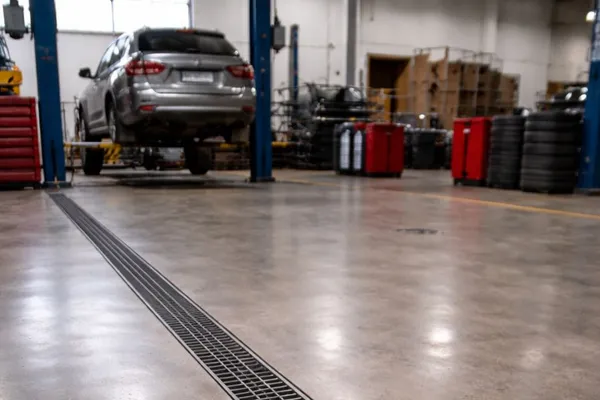
Automotive spaces stay busy, wet, and dirty. A floor that never really clears water slows the work, creates slip risks, and turns cleanup into a permanent chore.
Vehicles carry wash water and surface runoff across the slab. Without a collection point, the same wet lane keeps reappearing every day.
Bay entrances act like runoff funnels. Water that gets inside the opening spreads across active work areas fast.
Wet concrete mixed with shop debris is a bad combination. A drain in the wrong place leaves the mess exactly where technicians and customers walk.
Service bays, detail lanes, and wash areas all need a clear path for water. If the floor relies on chance slope alone, it will not stay clean.
Automotive drains need to stand up to repeated wheel loads, cleaning cycles, and the abuse of a working shop. Material choice and tie-in planning both matter.
Bay entries, detail lanes, and interior work zones do not all need the same drain body. We match the material and grate to the traffic, fluids, and cleaning routine in that specific area.
We usually place these drains across bay doors, in wash-down lanes, or along the low side of service areas where water and fluids repeatedly collect.
In an auto shop, the best drain location is usually tied to workflow. That might be just inside a bay door, at the end of a wash lane, or across a threshold where runoff keeps getting tracked into active work space.
We also review what the drain is expected to catch. Surface water, wash water, and shop fluids are not all treated the same, so the outlet path has to be confirmed before the saw even starts.
Most automotive drain work is phased by bay or lane so the shop can keep operating. We focus on the cut zone, the tie-in, and getting the surface back into service without leaving a weak patch around the frame.
We confirm traffic type, cleaning patterns, and where water or fluids actually build up during normal operation.
The crew opens the concrete strip cleanly so the drain can be seated properly without ragged slab edges.
The drain body is installed flush with the working surface and aligned so water moves toward the outlet instead of holding in the trough.
We connect to the right drainage route for that area and verify the outlet before the patch goes back in.
The surrounding slab is patched for real wheel traffic, not just appearance, so the drain stays stable in daily use.
Automotive spaces are not generic floor-drain jobs. We confirm what the drain is catching and what the site is already approved to discharge before we tie anything together.
The legal tie-in for a dealership detail lane is not automatically the same as a repair bay or an exterior approach drain. We verify the drainage route based on the existing building system and the intended use.
If the work changes interior plumbing or requires connection updates, permit and inspection requirements may apply. We identify that before construction starts.
Water is one thing. Water mixed with oils, cleaners, or other shop by-products is another. The drainage path has to match what the area actually handles.
Automotive drain pricing depends on slab depth, shop phasing, traffic loads, and what the approved tie-in looks like.
Get a fixed-price quote after a free site visit — not a range.
Usually, yes. Most auto-shop work is phased one bay or one lane at a time so the facility can keep moving while the drain work is underway.
Yes. They are taking repeated wheel traffic and often more aggressive cleaning conditions. That changes both the grate specification and the surrounding concrete work.
Yes. That is one of the most common placements because it catches water before it spreads deeper into the work area.
They can, but the tie-in and treatment side depend on what the wash area is handling and how the site plumbing is already set up. We confirm that before installation.
Treating them like generic surface drains. In shops and dealerships, traffic, fluids, and code requirements all affect what the drain should be and where it should go.
Usually one to two days per work zone, plus curing time before full traffic returns. We sequence the work so the shutdown stays as narrow as possible.
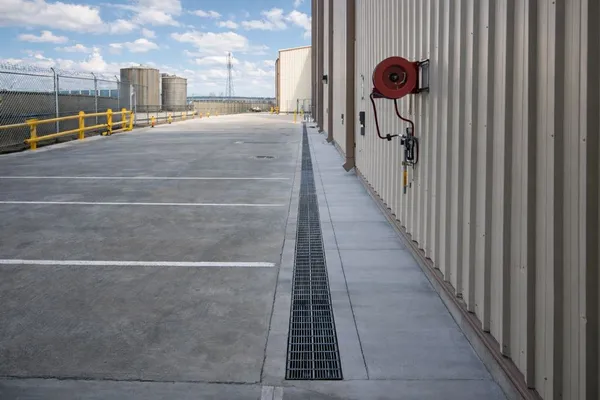
Heavy-duty surface drainage engineered for commercial traffic, runoff volume, and year-round reliability.
View details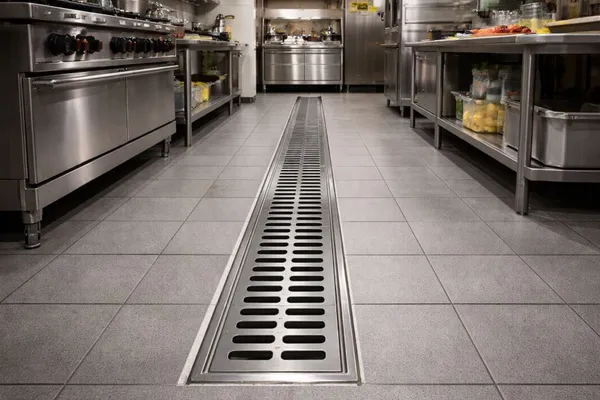
Drainage designed for kitchens, prep areas, wash zones, and service corridors.
View details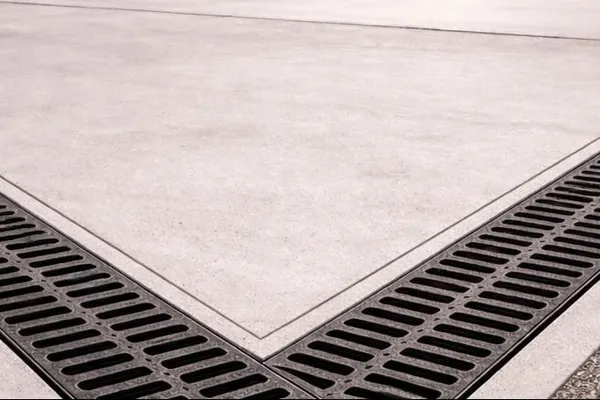
Surface drainage designed for fueling lanes, forecourts, and high-exposure pavement areas.
View detailsFree site visit across the GTA. We'll tell you what you actually need — no upsell.