
Storm and site connection work
If the job involves a new municipal connection, civil changes, or modifications to site drainage infrastructure, permits and coordination are usually part of the scope.
Parking lot and loading area trench drains collect runoff before it ponds in traffic lanes, freezes at dock doors, or starts breaking down the pavement. We size the channel for the traffic, not for a brochure.
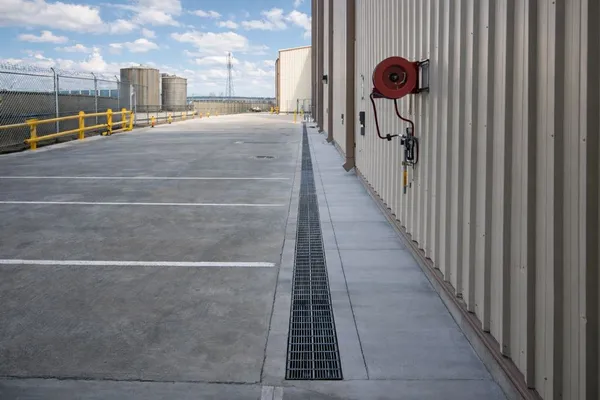
Commercial pavement carries more water, more traffic, and more liability than a residential slab. Once ponding starts in a loading area, the damage compounds fast.
Vehicles track standing water across the site and into buildings. At loading areas, that usually means repeated puddling at the same low point.
The same ponding that slows loading in rain becomes a slip hazard in winter. That is a safety issue before it is a maintenance issue.
If runoff keeps pounding one seam, asphalt and concrete start breaking down along the same wheel path and repair joints widen every season.
A basin in the wrong place does not help the area around a dock or apron. The water needs to be intercepted where it concentrates, not ten feet away.
Commercial drains are about wheel loads, runoff volume, and the pace of the site. We choose the channel and grate around actual use - deliveries, snow clearing, forklifts, and heavier truck traffic.
The right load class depends on axle weight, tire contact, and where the drain sits in the lane. At docks and truck aprons, undersizing the grate is the expensive mistake.
We usually place these drains across dock aprons, in front of overhead doors, or at low points in traffic lanes where water repeatedly concentrates.
In commercial lots, the right location is tied to traffic and grade. A drain at the base of a truck apron or across a loading lane does more than a generic low-point basin because it intercepts water before it spreads through the whole work area.
We also look at how the site is maintained. Snow plows, forklifts, pallet traffic, and turning trucks all affect where the drain can sit and what grate it has to survive.
Commercial installs are usually phased so the site can keep working. We cut, excavate, set, tie in, and patch in sections where possible instead of turning the whole area into one open trench.
We identify the wheel paths, snow routes, and low points so the drain works with site operations instead of fighting them.
The crew opens only the section needed for that stage of the install so access can stay as open as the site allows.
The drain is bedded and aligned for both slope and traffic loading. On commercial work, structure matters as much as flow.
We connect to the approved storm route, basin system, or engineered discharge point and verify the outlet path before patching.
The surrounding pavement is restored so trucks and plows can cross the drain cleanly without rocking the frame.
Commercial exterior drainage gets more scrutiny than a residential apron because it affects site runoff, vehicle access, and sometimes municipal infrastructure.
If the job involves a new municipal connection, civil changes, or modifications to site drainage infrastructure, permits and coordination are usually part of the scope.
A grate that survives cars may fail under repeated delivery traffic. We match the drain to the site use before we talk about finish details.
Commercial surface water should not be dumped into the wrong system just because it is nearby. The drainage route has to match the site design and approvals.
Commercial drainage pricing depends on traffic loading, drainage route, working hours, and how much of the site has to stay live during the work.
Get a fixed-price quote after a free site visit — not a range.
We start with the traffic, not the drain catalog. Passenger vehicles, cube vans, forklifts, and loaded trucks all change the load class we need to specify.
Usually, yes. Most commercial work is phased so access can stay open in sections. The exact sequencing depends on the site layout and how much room there is to route traffic around the work.
Often they do, but not automatically. We confirm the existing site drainage route, capacity, and legal connection path before we tie anything in.
That depends on the restoration material and the loading. Light access may return sooner, but full service traffic usually waits until the patch has cured properly.
Wrong load class, weak surrounding concrete, or a drain installed in the wrong spot. Commercial drains fail when they are treated like decorative site features instead of structural site drainage.
Yes. Dock aprons and door lines are some of the best uses for trench drains because they intercept water exactly where operations need the surface to stay clear.
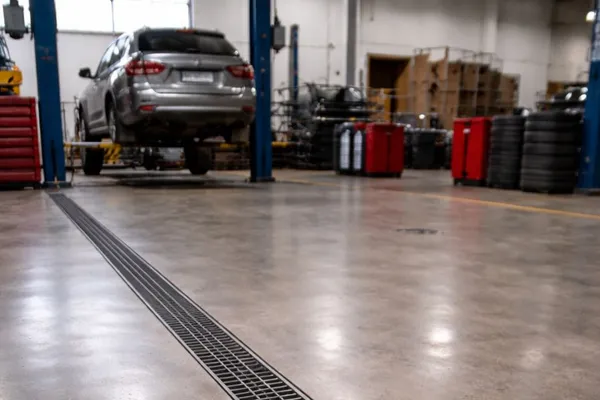
Surface drainage designed for service bays, drive-through lanes, and vehicle handling areas.
View details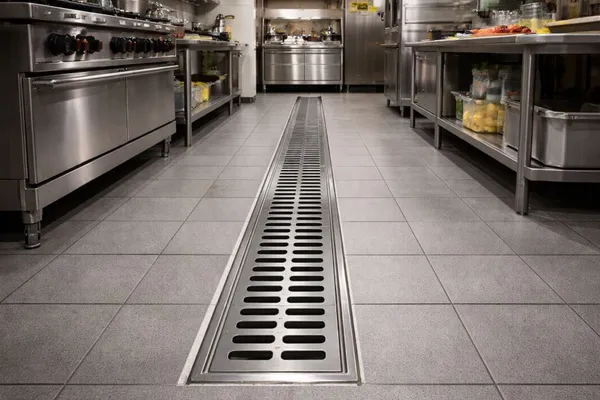
Drainage designed for kitchens, prep areas, wash zones, and service corridors.
View details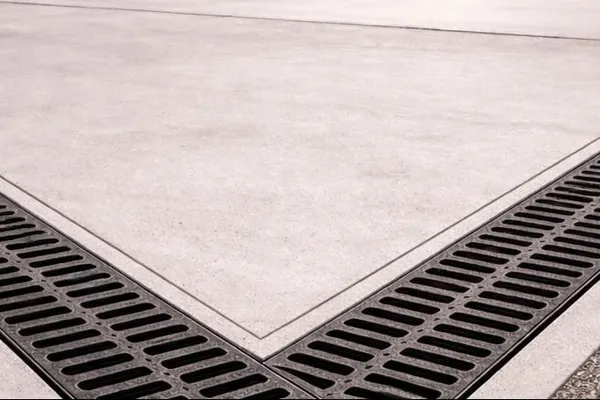
Surface drainage designed for fueling lanes, forecourts, and high-exposure pavement areas.
View detailsFree site visit across the GTA. We'll tell you what you actually need — no upsell.