
Different facilities, different routes
Wash-down water, surface runoff, and process-area drainage are not automatically handled the same way. We review the actual discharge path before tying the channel in.
Warehouse and industrial trench drains move wash-down water and runoff through large working floors without letting it spread into traffic aisles or door thresholds. We build them for forklift traffic, real flow volume, and the way the facility actually operates.
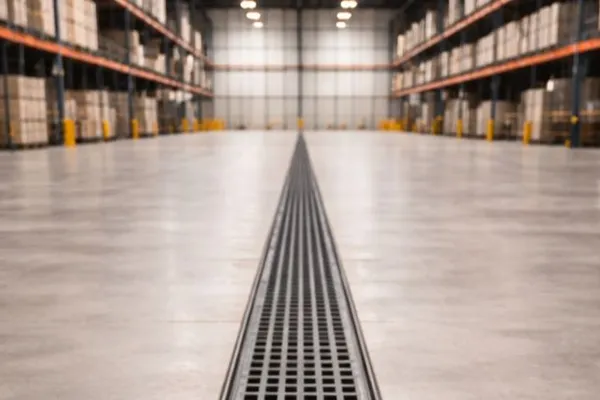
Large industrial floors make small drainage mistakes expensive. One low line across a warehouse can affect forklifts, product movement, cleanup time, and slab durability all at once.
Water in active aisles gets tracked through the building and across finished surfaces, which makes cleanup harder and movement less predictable.
Large floor areas can hold more water than a few point drains can realistically clear. The same low bands stay wet after every cleaning cycle.
Repeated water exposure at the same line starts weakening joints, patch edges, and high-traffic concrete around existing drains.
If crews have to chase water with brooms, squeegees, or temporary berms, the floor is not draining the way it should.
Industrial drain systems are sized for floor area, discharge volume, and traffic. The channel spacing, depth, and load class all depend on how the facility is actually used.
On warehouse and industrial jobs, the drain body is only part of the work. Surrounding slab support, forklift traffic, and outlet capacity all decide whether the install holds up.
We usually place these drains across overhead doors, along long wash-down aisles, or in process zones where water keeps collecting over wide floor areas.
In large facilities, the drain often belongs where the floor keeps producing the same wet band - not where it is easiest to cut. That might be across an overhead opening, down the center of a wash aisle, or at the edge of a process area that needs to clear fast.
We also review traffic before layout. Forklifts, pallet jacks, carts, and heavier equipment all change what frame, grate, and patch detail the floor needs around the drain.
Industrial drain work is usually phased by bay, aisle, or process area so the facility can keep moving. We build the sequence around operations, not the other way around.
We confirm where water is being generated, how the floor is sloped, and what traffic the finished drain has to survive.
The trench is cut and excavated in phases so the facility can keep operating around the work where possible.
We set the drain for both slope and structural support because industrial traffic punishes weak frames and weak patches quickly.
The outlet is connected to the facility system that is meant to receive that water, then tested before the slab is restored.
Concrete around the drain is rebuilt so forklifts, carts, and maintenance traffic can cross the line reliably.
Industrial drain work is closely tied to facility operations. The kind of water being handled, the existing drainage system, and the traffic loading all affect what the right installation looks like.
Wash-down water, surface runoff, and process-area drainage are not automatically handled the same way. We review the actual discharge path before tying the channel in.
Many industrial installs need phasing around production, shipping, or maintenance windows. The installation plan has to fit the facility schedule.
If the grate, frame, or surrounding patch is not built for the equipment using the floor, the drain will start moving long before the concrete should.
Industrial drain pricing depends on traffic loads, floor area, phasing, and what system the new run has to tie into.
Get a fixed-price quote after a free site visit — not a range.
Because large floor areas do not always pitch well to a few single points. A trench drain collects water across a full line, which makes it far more effective in long aisles, door lines, and wash-down zones.
Yes, if they are specified for the traffic. Forklift loads, turning patterns, and wheel type all affect the load class and the surrounding concrete design.
Usually, yes. Most warehouse and industrial work is phased by area so the facility can keep moving around the cut zone.
That depends on what kind of water the area is generating and what drainage system the facility already has in place. We confirm that route before installation.
Weak spec, wrong location, or a poor patch around the frame. On industrial floors, the traffic and structural side of the install matter just as much as the drainage side.
That depends on the restoration and loading, but full service traffic typically waits until the patch has cured properly. We plan the work around that reality from the start.
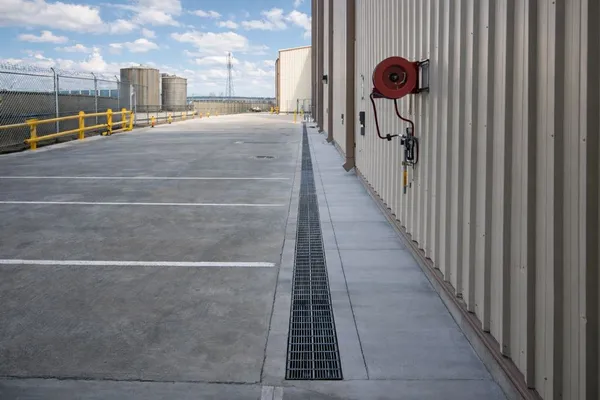
Heavy-duty surface drainage engineered for commercial traffic, runoff volume, and year-round reliability.
View details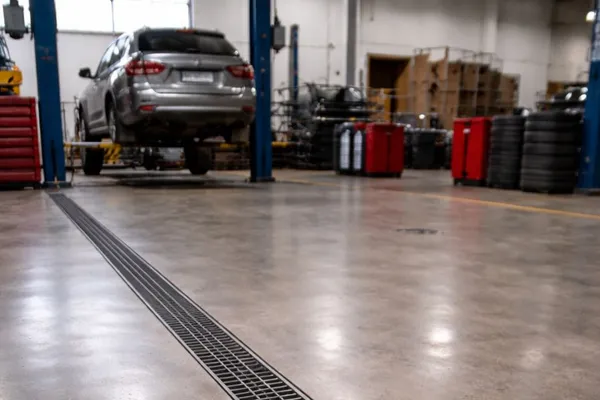
Surface drainage designed for service bays, drive-through lanes, and vehicle handling areas.
View details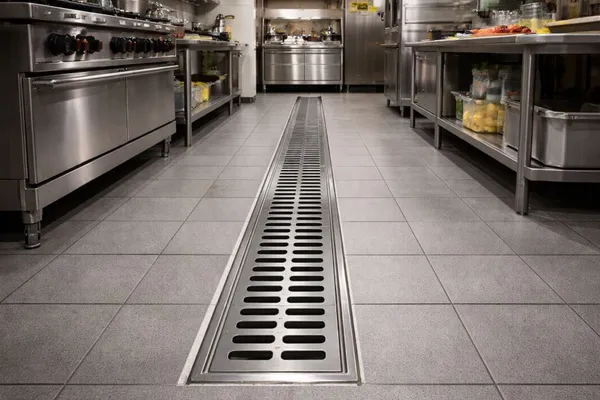
Drainage designed for kitchens, prep areas, wash zones, and service corridors.
View detailsFree site visit across the GTA. We'll tell you what you actually need — no upsell.