
Site approvals and drainage plans
Forecourt drainage often sits inside a larger site drainage strategy. Depending on the scope, permit, engineering, or operator coordination may be part of the work.
Fueling-area trench drains manage runoff where pump islands, forecourts, and high-exposure pavement collect water fast. We size them for the traffic, confirm the site's drainage controls, and install them where the water actually concentrates.
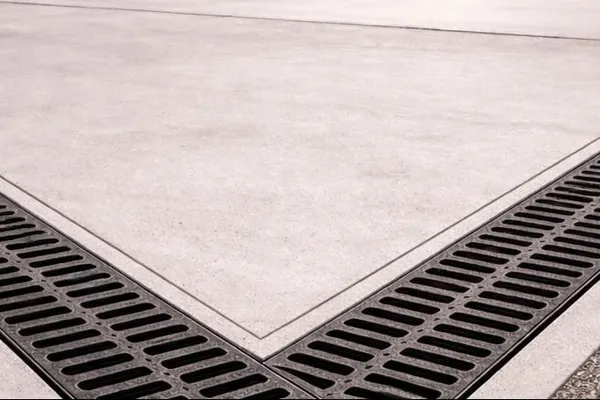
Fueling areas combine traffic, weather exposure, and surface contamination risk in one of the hardest-working parts of a commercial site. Water cannot be left to find its own way there.
Low spots around pump islands or canopy edges hold water right where vehicles queue, stop, and turn.
Once water starts travelling between islands and drive lanes, the whole site feels wetter and harder to maintain.
Drainage in fueling areas has to account for more than rain. Site design has to respect the kind of runoff the forecourt can produce.
A catch basin that sits outside the real flow path does not help the pump apron. The water has to be intercepted where it gathers.
Fueling-area drains need heavy traffic capacity and site-specific tie-in planning. This is not a place for lightweight channel bodies or vague assumptions about where the water ends up.
At pump lanes and forecourts, the drain body, frame, and surrounding concrete all have to be designed as one working assembly. Weak patch work fails fast in this environment.
We usually place these drains at canopy edges, between islands and traffic lanes, or across low forecourt zones where runoff repeatedly pools.
At gas stations, water often concentrates in predictable places: the edge of the pump apron, the low line across the canopy area, or the lane where vehicles slow and idle. That is where a trench drain earns its keep.
We also look beyond the surface. Forecourt drainage has to work with the site's existing separators, basins, and approved drainage controls. This is not a place for casual tie-ins.
Fueling sites are usually phased carefully so traffic, safety controls, and access can keep functioning. We sequence the cut, channel install, tie-in, and restoration around the operating reality of the forecourt.
We confirm vehicle paths, low points, and the drainage controls already built into the site before laying out the cut.
The crew isolates the work zone so the site can stay as functional and safe as possible while the channel run is installed.
We install the drain body for the loading and exposure level of the forecourt, not just for basic runoff.
The outlet is tied into the approved site route and checked before the surrounding pavement is restored.
Concrete or asphalt is rebuilt so the drain stays stable under turning traffic and routine site maintenance.
Fueling-area drains are tied to site design, environmental controls, and traffic use. The installation side and the compliance side both matter here.
Forecourt drainage often sits inside a larger site drainage strategy. Depending on the scope, permit, engineering, or operator coordination may be part of the work.
Channel body, grate, frame, and restoration all need to match the site's traffic and exposure conditions. This is not a standard lot drain.
At fueling sites, drainage cannot just be sent to the nearest pipe because it is convenient. The outlet has to match the site's approved drainage controls.
Fueling-area pricing depends on traffic demands, drainage controls already on site, phasing, and restoration scope.
Get a fixed-price quote after a free site visit — not a range.
Because those areas collect runoff in long, busy low points. A trench drain intercepts the water before it spreads across active fueling lanes and pedestrian paths.
Usually, yes. Forecourts see repeated vehicle traffic, turning loads, and aggressive maintenance conditions, so the grate and frame need to match that reality.
Often, yes. The exact phasing depends on site layout and safety requirements, but most forecourt work is planned in controlled sections rather than all at once.
That depends on the site's existing drainage design and controls. We confirm the approved route before we install the drain - that is a core part of the job.
Wrong load class, weak restoration around the frame, or an outlet that was never designed for the runoff being collected. In fueling areas, shortcuts show up quickly.
Yes, as long as the site conditions, phasing, and drainage strategy are reviewed first. Most work in this category is retrofit work, not new-build only.
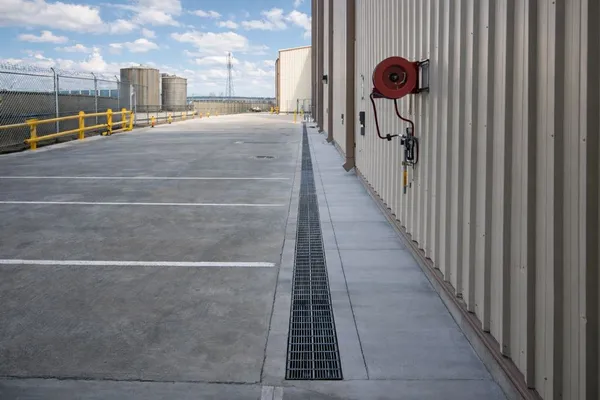
Heavy-duty surface drainage engineered for commercial traffic, runoff volume, and year-round reliability.
View details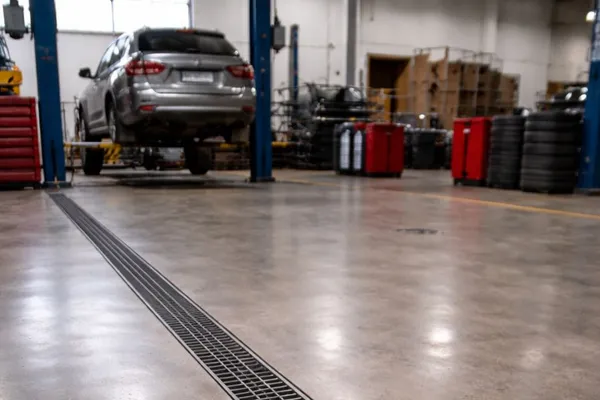
Surface drainage designed for service bays, drive-through lanes, and vehicle handling areas.
View details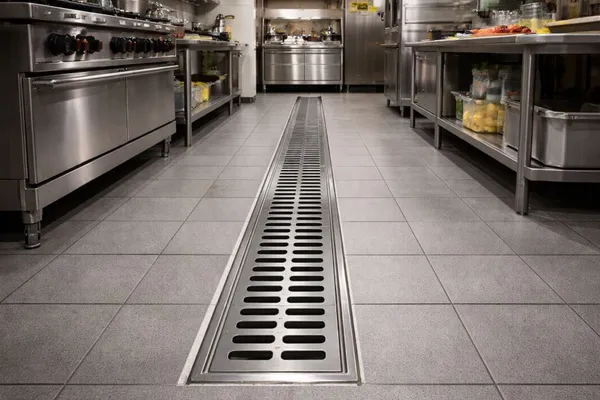
Drainage designed for kitchens, prep areas, wash zones, and service corridors.
View detailsFree site visit across the GTA. We'll tell you what you actually need — no upsell.