
Length of the run
More drain length means more saw-cutting, excavation, channel body, grate, and finish work. A single garage door opening is one thing. A long laneway or broad apron is another.
For most residential jobs, the answer is $1,800-$4,500. The real number depends on how much surface we cut, what grate and channel you need, where the water ties in, and how much concrete or asphalt has to go back.
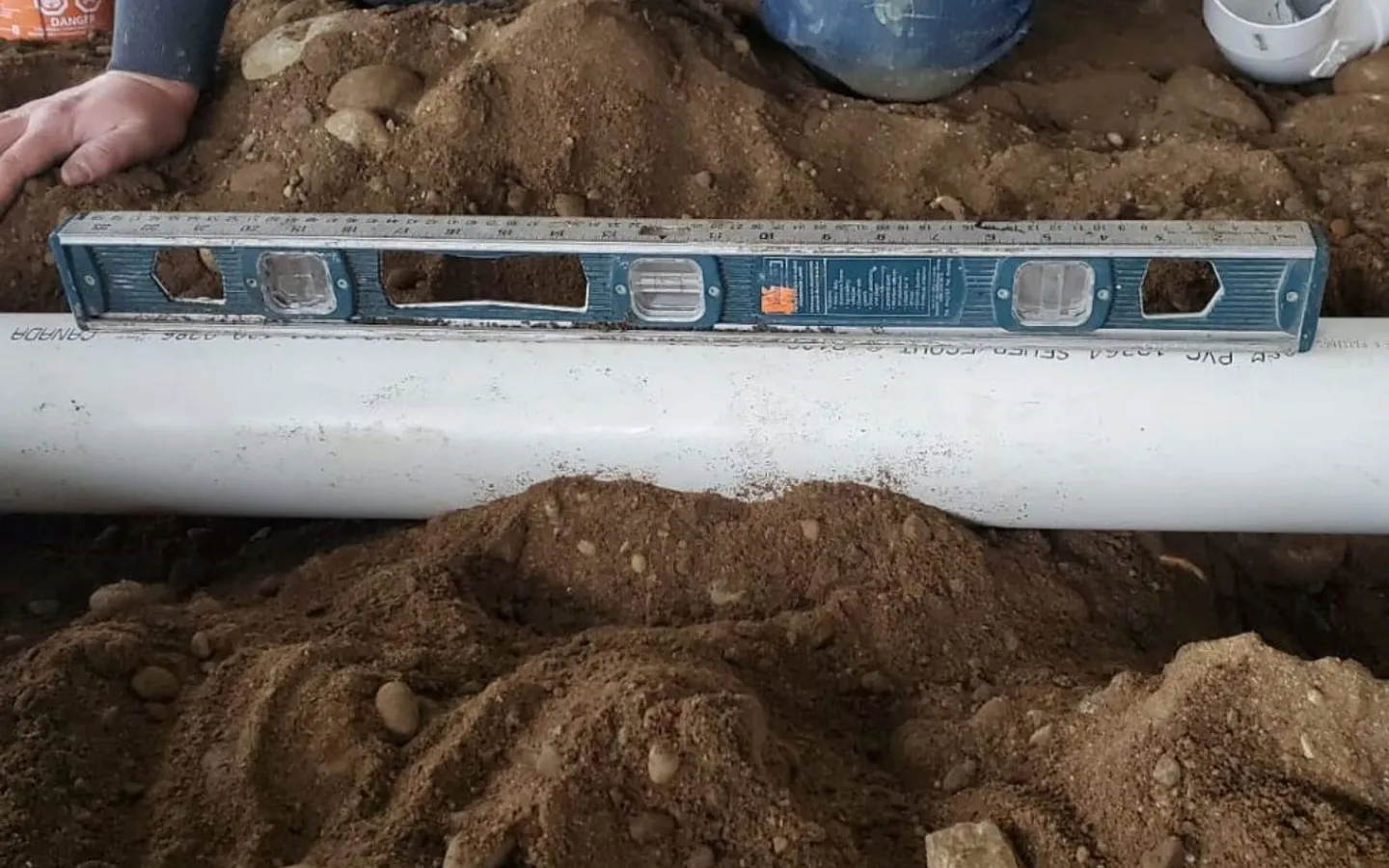
A standard residential trench drain install in the GTA usually lands between $1,800 and $4,500. That covers the full job: saw-cutting, excavation, setting the channel to slope, connecting to legal drainage, and pouring or patching the surface back.
The low end is a short run at a garage entrance with a straightforward existing outlet. The high end is a longer run, heavier grate, more concrete removal, or a tie-in that takes real plumbing work. Commercial and industrial jobs are quoted after a site visit because traffic loads, drainage rules, and restoration scope change too much from property to property.
The same 12-foot trench drain can price two different ways depending on what we are cutting into and where the water can legally go.
More drain length means more saw-cutting, excavation, channel body, grate, and finish work. A single garage door opening is one thing. A long laneway or broad apron is another.
Plain concrete is more predictable than thick reinforced slab, decorative hardscape, or a commercial pavement build-up. If the finish has to look clean when we leave, restoration labour goes up.
A light residential grate does not cost the same as a heavy-duty ductile or stainless system. The more wheel traffic, salt, wash-down, or abuse the drain has to survive, the more the spec matters.
Connecting to an existing private storm line or sump discharge is usually straightforward. A new route, deeper outlet, catch basin work, or municipal coordination pushes the number upward fast.
Tight access, hand excavation, traffic control, and careful patch work all show up in labour. An open suburban driveway prices differently than a downtown ramp or active loading lane.
These are not phone quotes. They are a practical way to understand what pushes a residential job toward the low, middle, or top of the range.
Think a modest garage entrance or apron where we can tie into existing private drainage, use a standard residential grate, and patch a limited amount of concrete.
This is where a lot of GTA jobs land. The run is longer, the concrete removal is heavier, or the outlet needs more plumbing work than a straight connection.
If the drain stretches across a wide apron, needs deeper excavation, or needs a stronger grate and more finish work, it moves toward the top of the residential range.
Parking lots, shops, warehouses, restaurants, and fueling areas can require heavier load classes, traffic staging, wash-down planning, and engineered discharge routes.
We can usually tell within one visit whether your job is a simple residential intercept drain or something that needs a heavier spec.
On a standard residential install, the quote usually covers the whole drain scope from cut to patch. That means layout at the real low point, saw-cutting, excavation, setting the drain body to slope, tying into legal drainage, and restoring the surface around the trench.
What changes from job to job is not whether those steps happen. It is how hard they are. A short straight cut into a plain concrete apron is faster than a decorative driveway, a tight sideyard access route, or a drain that needs a deeper tie-in to reach the right outlet.
This is also why two contractors can be far apart on price. One might be pricing the drain hardware only. The other is pricing the actual install, the concrete work, and the plumbing needed to make it work through a GTA winter.
The pattern below is a better budgeting tool than looking at drain hardware prices online. Installation scope is what drives the number.
| Job type | Typical range | What usually drives it | Best fit |
|---|---|---|---|
| Short garage entrance retrofit | $1,800-$2,400 | Short run, standard residential grate, existing private outlet | Single-bay garage or modest apron intercept |
| Typical driveway intercept drain | $2,400-$3,300 | Longer cut, more concrete removal, moderate tie-in work | Most residential driveway and laneway installs |
| Wide apron or more complex residential layout | $3,300-$4,500 | Wider run, deeper excavation, stronger grate, more finish work | Large driveways, longer aprons, or more exposed runoff paths |
| Commercial, industrial, or wash-down sites | Fixed quote after site visit | Load class, discharge rules, access limits, traffic staging, restoration scope | Parking lots, service bays, kitchens, warehouses, and fueling areas |
Commercial pricing usually starts with a site walk because the load class, legal outlet, and restoration plan matter more than the lineal feet alone.
The drain body itself is rarely the part that surprises people. It is usually the site conditions around it.
The surface work might be easy. Finding a legal drainage route with enough fall is often the harder part. If we have to chase the pipe farther than expected, the scope changes.
Saw-cutting a plain slab is one price. Matching decorative concrete, interlock, epoxy-coated floors, or heavily worn pavement is another. Good finish work takes time.
People sometimes buy a drain online before they know the channel depth, grate class, or outlet path. That is how a cheap product turns into a second purchase and a second install.
A trench drain is not the cheapest thing you can do to a driveway or hard surface. It is often the cheapest permanent fix when water keeps hitting the same edge, doorway, or low spot year after year.
If water is freezing across a garage entrance, washing fines out from under pavers, staining the slab, or getting into a building, you are already paying for the problem. You are just paying for it slowly - in patch repairs, ice management, grading work that does not hold, or damage inside the structure.
The jobs that age well are the ones where we solve both parts at once: catch the water at the right point and send it somewhere legal. That is why the install details matter more than the sticker price of the grate.
These are the questions we usually answer after someone sees the range and wants to know what actually changes it.
Most standard residential driveway and garage entrance installs in the GTA land between $1,800 and $4,500. The exact number depends on the drain length, the grate spec, the outlet route, and how much concrete or asphalt has to be restored after the install.
Because the real scope is set by the low point and the legal tie-in. From the phone, people can describe where they want the drain. On site, we can see where the water actually ends up, how thick the slab is, and whether there is a usable storm or sump connection nearby.
Yes, for a standard install the quote includes cutting the surface, installing the drain, and pouring or patching the trench area back. What is usually not included unless the site needs it is large-area slab replacement, decorative resurfacing beyond the drain zone, or broader pavement reconstruction.
The cheapest install is usually a short residential run with a straightforward existing outlet, standard grate, and simple concrete patch. The mistake is chasing the cheapest hardware instead of the right layout. If the drain is in the wrong place or cannot discharge properly, the low price does not last.
Not perfectly linearly, but longer runs do cost more. Some setup labour is fixed no matter what, but every added foot usually means more cutting, more excavation, more drain material, and more restoration work.
Usually, yes. Commercial and industrial sites often need heavier grate classes, stricter discharge planning, traffic staging, and more demanding surface restoration. That is why we quote those jobs after a site visit instead of publishing a number that would be too loose to trust.
Sometimes. Most residential private tie-ins do not need a separate permit, but municipal storm connections or certain commercial sites can require permits, reviews, or inspections. If your site needs that step, we flag it in the quote so it is not a surprise later.
Free site visit across the GTA. We'll tell you what you actually need — no upsell.