
Surface type and thickness
Saw-cutting a 4-inch residential slab is fast. Cutting a 6-inch reinforced commercial slab or matching a decorative paver surface takes more time and more care. The surface decides the cut; the cut decides the day.
Cut, set, tie in, patch. Most residential installs are one day on site. Here is the full timeline from first call to finished drain — so nothing about the day surprises you.
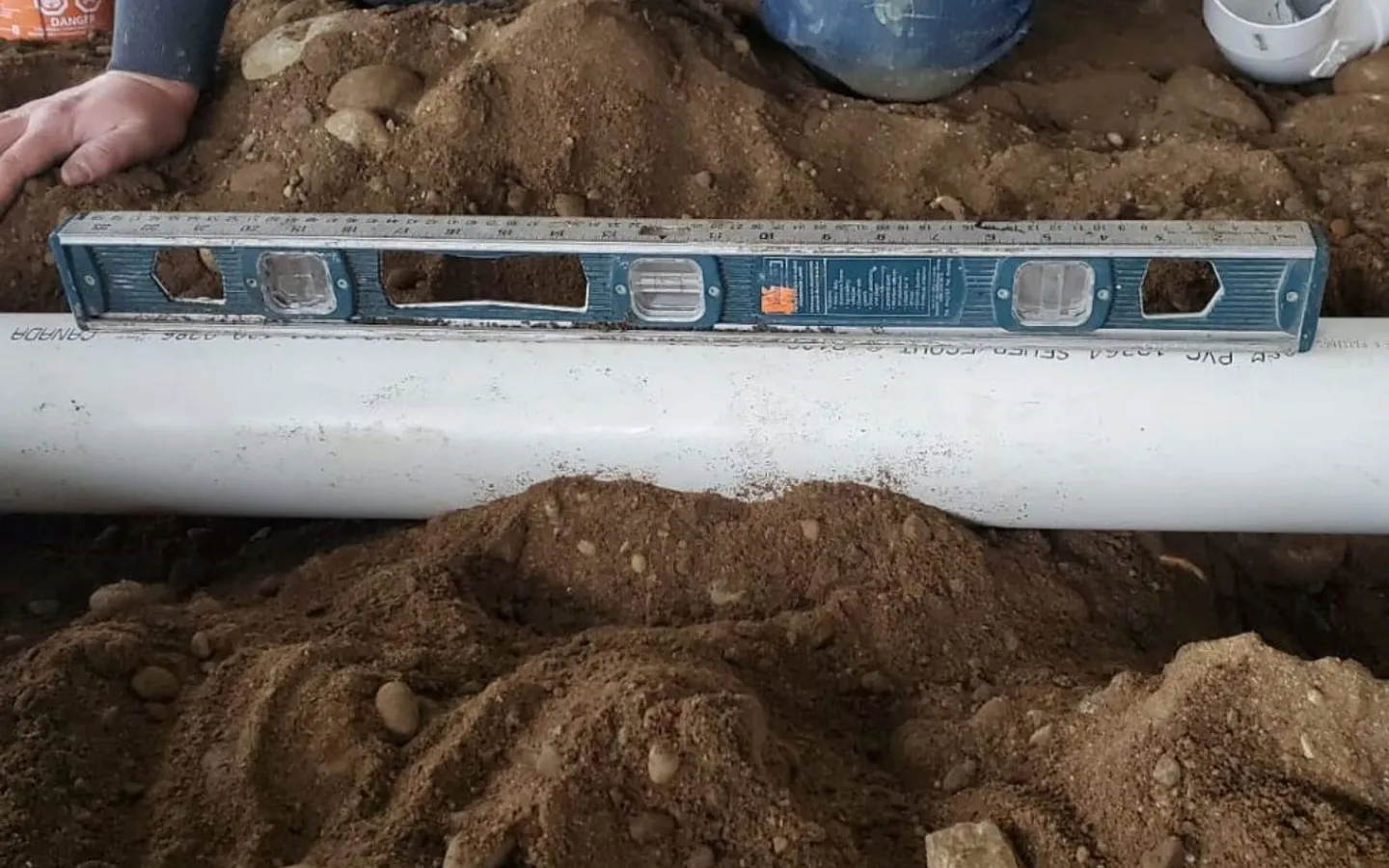
From the first phone call to a finished drain is usually two to three weeks. Most of that is scheduling — our crew's next available slot, your preferred window, and material lead time if the spec is not off the shelf. The actual work on your property is usually a single day.
A residential driveway trench drain runs through the same four phases every time. Site visit and quote. Spec and scheduling. Install day. Cure and handoff. Skip any of the four and something goes sideways later.
The basic five-step sequence is the same for every residential job. What changes is how long each step takes and how much crew it needs.
Saw-cutting a 4-inch residential slab is fast. Cutting a 6-inch reinforced commercial slab or matching a decorative paver surface takes more time and more care. The surface decides the cut; the cut decides the day.
A 6-foot intercept drain at a garage entrance is a half-day job. A 40-foot apron run is a full day with a larger crew. Every additional linear foot adds cutting, excavation, channel, backfill, and patch time.
Connecting the outlet to an existing sump pump discharge or private storm line is usually straightforward. A new route, deeper excavation, or a municipal storm connection adds hours and sometimes a return visit.
Open suburban driveway, truck parks on the street, crew walks in. Tight downtown lot with no parking and narrow access around the house — different day. Access drives crew size, tool choice, and how long haulaway takes.
Summer installs are fastest. Winter installs are possible with cold-weather admixtures and concrete blankets, but they add a day for extra cure protection. We do not pour during active rain — that is a reschedule, not a delay.
Most of the project time is phases 1 and 2 (scheduling and materials). Phase 3 is the one crew day. Phase 4 is the cure.
A senior plumber visits the property, reads where the water is actually going, measures the run, checks for viable outlet routes, and gives you a fixed-price quote. Free, no obligation. We do this on weekdays; most visits wrap up in under an hour.
We confirm the grate and channel spec for your site, order any non-stock materials, and schedule a crew slot. If the spec is off-the-shelf polymer concrete with a standard ductile iron grate, this phase is fast. Special-order stainless or custom geometry adds days.
Crew arrives mid-morning. Saw-cut the channel line, excavate to grade, compact the sub-base, set the channel to 1–2% slope, tie in the outlet, and pour concrete or patch asphalt. By end of day the drain is in and the apron is walkable.
The concrete or asphalt patch needs 24–48 hours to cure before vehicle traffic. We come back to inspect after the first heavy rain to confirm the drain is pulling water the way it should. Workmanship warranty is in writing on the quote.
We visit during normal business hours, usually within a week of your call. Free and no-obligation — if the site does not need a drain, we tell you that too.
The install day itself is a fixed sequence. We do the same five steps on every job — the difference between a simple driveway install and a complex commercial install is how long each step takes, not which steps happen.
Crew size for a residential install is usually two — one plumber and one labourer. For a longer run or commercial work we scale up to three or four. The truck carries everything needed, so there is no running out for materials partway through.
The homeowner does not need to be home. We confirm site access the day before and park on the street where we can. Most clients are surprised how fast the cut goes — that is the loud part, and it is typically done by late morning.
Both follow the same five-step sequence. The scale, crew, and time-on-site differ.
| Stage | Residential | Commercial |
|---|---|---|
| Site visit | ~1 hour, one plumber | 1–2 hours, plumber plus site manager |
| Spec lead time | 2–5 business days | 1–2 weeks (materials, permits) |
| Permits | Usually none for private tie-in | Often required — storm connection, trades coordination |
| Crew size | 2 people | 3–5 people plus flagger if traffic control needed |
| Time on site | 1 day (usually mid-morning to end of day) | 2–4 days depending on run length and restoration |
| Equipment | Saw, excavator attachment, mixer | Saw, dedicated excavator, mixer or pumper truck |
| Cure window | 24–48 hours residential concrete | 48–72 hours commercial concrete (higher PSI mix) |
Commercial sites often need traffic staging, after-hours work, or phased installation to keep operations running — that is planned in the spec phase, not improvised on site.
When an install day goes sideways, it is almost always one of these four. We build the check into the first hour on site so we do not end up ripping out finished work.
Before cutting, we confirm there are no gas, water, electric, or telecom lines in the cut path. Ontario One Call takes 5 business days — we factor that into Phase 2. Cutting before locates is how crews hit a gas line. We do not skip this.
We verify the outlet tie-in works during the site visit, not on install day. If the existing sump or storm line has a hidden clog or a reduced pipe, we find out before the channel is in — not while the crew is trying to finish.
Concrete below 5°C or during active rain is a redo waiting to happen. We check the forecast at quote and the morning of install. If the window is borderline, we reschedule — a fresh pour in bad weather always costs more than a one-week delay.
The biggest post-install failure is a homeowner parking a vehicle on a 12-hour-old pour. 24–48 hours is the cure window. We leave cones and a clear written note — please respect it. Cracking the fresh patch means tearing it out and doing it again.
The channel, grate, and outlet pipe all ship from quality manufacturers. None of them fail in the first 10 years. What fails in the first 10 years is the install — bad slope, wrong bedding, rushed cure, missed tie-in, cut through a service line.
This is why we run the four phases deliberately instead of rushing to quote-and-install in 48 hours. Phase 1 catches site conditions the homeowner might not know about. Phase 2 confirms the spec and the permit path. Phase 3 is the paid work. Phase 4 is the warranty conversation.
When someone asks why our residential quotes run 15–25% higher than the cheapest contractor who showed up, the answer is in the process. We do not skip the site visit. We do not skip the locate. We do not pour in bad weather. We come back after the first rain. That is the work.
The questions we usually get the week before install day — weather, access, timelines, warranty.
No. We confirm site access the day before, park on the street, and work from the driveway side. We do need you reachable by phone in case something on site requires a decision — for example, a hidden soft spot that changes the bedding approach.
Yes. We pour with cold-weather admixtures and insulating blankets down to about -10°C. Below that we usually reschedule. The install adds a day for extended cure protection, and the crew works slower in the cold, so winter installs run a bit longer than summer ones.
Saw cuts are clean and controlled — dust-suppressed, water-fed blade, straight lines. The cut removes exactly the concrete the drain body will replace, and the final patch is flush with the surrounding surface. We do not chip, jackhammer, or rough-cut the slab.
Light rain during cutting and excavation is fine. Heavy rain during the pour is a reschedule — concrete poured in active rain does not cure properly. We check the forecast the morning of install. If the window is bad, we tell you that morning and pick the next good day.
Foot traffic same day. Vehicle traffic 24 hours for a standard residential pour, 48 hours if the forecast shows cold overnight. Heavy trucks or RVs wait 72 hours. The cone and written note we leave on site gives you the exact window.
We come back after the first heavy rain to inspect. You can also test with a garden hose — water should disappear into the grate immediately and exit at the outlet within seconds. If water is pooling in the channel or backing up onto the surface, something is wrong and we fix it on warranty.
For most residential installs tying into existing private drainage — storm line, sump pump discharge, dry well — permit scope is determined by the municipality under its by-laws. Tie-ins to the municipal storm sewer always need a connection permit. We handle that paperwork if your install needs it.
Workmanship is covered under our standard warranty — written on the quote, applies to the install labour and the tie-in. The channel body and grate carry separate manufacturer warranties (typically 10–25 years depending on material). If something fails on our end, we come back and make it right.
Free site visit across the GTA. We'll tell you what you actually need — no upsell.