
Private property drainage
If we are tying into an existing private storm line, dry well, or legal discharge point on the property, there usually is not a separate permit just for the drain itself.
Patio and walkway trench drains pull surface water off finished hardscapes without tearing up the whole layout. We place them at the low point, keep the reveal tight, and tie them into drainage that works with the site.
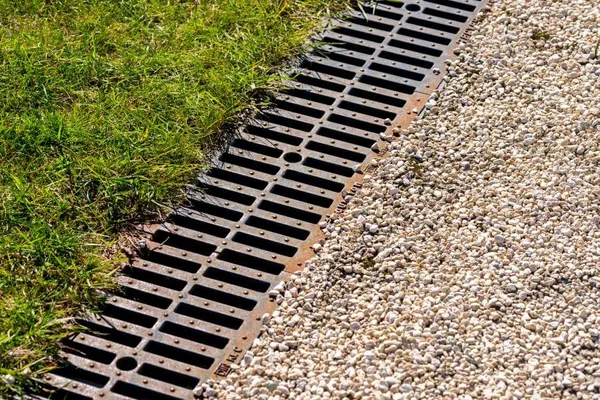
Finished hardscape looks flat and simple, but water exposes every bad elevation. One low corner, one threshold, or one retaining wall edge is enough to turn a patio into a puddle.
Water sits on the surface after rain instead of shedding cleanly away. On stone and pavers, that usually means the low point has nowhere to go.
The same puddle that looks harmless in summer becomes a slip strip once temperatures drop. Walkways, steps, and walkout landings are the usual problem spots.
If runoff keeps finding the same seam, it starts carrying bedding sand and base material with it. That shows up as loose joints and uneven edges.
A patio or walkout area can trap water against a wall or door if there is no collection point at the bottom of the grade.
Hardscape drains have to be low-profile, foot-friendly, and discreet enough to sit in finished outdoor spaces without looking like an industrial retrofit.
On paver and stone jobs, the visual line matters almost as much as the drainage. We keep the reveal straight, the grate flush, and the surrounding pattern intact.
We usually place these drains at the base of a slope, in front of a threshold, or along the edge where hardscape meets soil or retaining walls.
On patios and walkways, the right location is rarely the center of the space. It is usually the low edge near a walkout door, the bottom of a short run of steps, or the seam where a finished surface meets a planting bed or retaining wall.
We read the surface first, then put the drain where the water is already trying to collect. That lets us intercept runoff with the least disruption to the finished layout and the cleanest possible tie-in.
Most hardscape trench drain jobs are a one-day install if access is good and the discharge route is straightforward. On pavers or more delicate finishes, we may spend extra time lifting and resetting the surrounding surface so the repair disappears.
We hose-test or read the surface to confirm exactly where runoff gathers before the first cut goes in.
Pavers are lifted, stone edges are protected, and concrete or overlay surfaces are cut as cleanly as the material allows.
The body is bedded to slope and checked so the grate finishes flush without rocking or toe-catching edges.
We connect the outlet to the approved drainage route and confirm the water has somewhere real to go.
The surface around the drain is patched, re-laid, or pointed so the drain looks intentional instead of added later.
Most patio and walkway drains are simple because they stay on private property and tie into private drainage. The job gets more involved when the only answer is a municipal connection or major grading correction.
If we are tying into an existing private storm line, dry well, or legal discharge point on the property, there usually is not a separate permit just for the drain itself.
Near doors, walls, and retaining edges, the drain has to work with the grade around the house. We confirm that runoff is being pulled away, not just hidden at the surface.
A patio drain that dumps beside the house, onto the neighbour's side, or into the wrong pipe is not a fix. It just moves the problem a few feet away.
Hardscape pricing depends on surface type, how carefully the finish has to be opened and reset, and what drainage route is available.
Get a fixed-price quote after a free site visit — not a range.
Usually, yes. Most of the time we only need to open a controlled strip where the drain belongs, tie it into drainage, and blend the finish back around it. If the whole patio is badly pitched, we will tell you that too.
It should read as part of the layout, not like a patch. We keep the line straight, the grate flush, and the surrounding finish tight so it looks intentional.
Yes. Interlock is one of the more common retrofit surfaces for this kind of work. We lift the pavers in the drain zone, install the channel, and reset around it.
Often, yes - if the problem is surface runoff collecting at the bottom of the grade. We still check the surrounding slope and the outlet path so we are not just trapping water in a different place.
No. Exterior surface water should not be dumped into the sanitary side. We tie these drains into private storm drainage, dry wells, swales, or other legal discharge points instead.
Wrong location. If the drain is not set at the real low point, water goes around it, behind it, or past it entirely. We spend the time reading the surface before we cut.
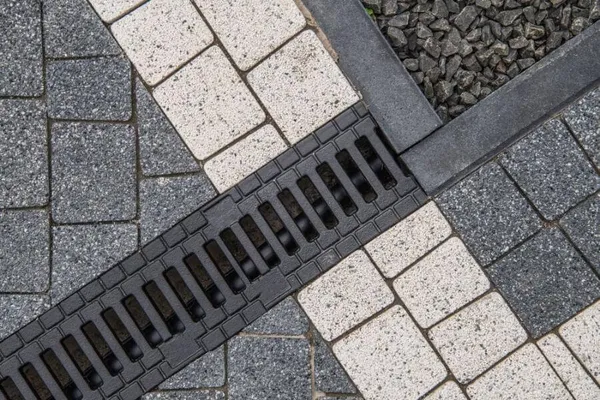
Linear surface drainage designed for long runoff paths, sloped driveways, and vehicle traffic.
View details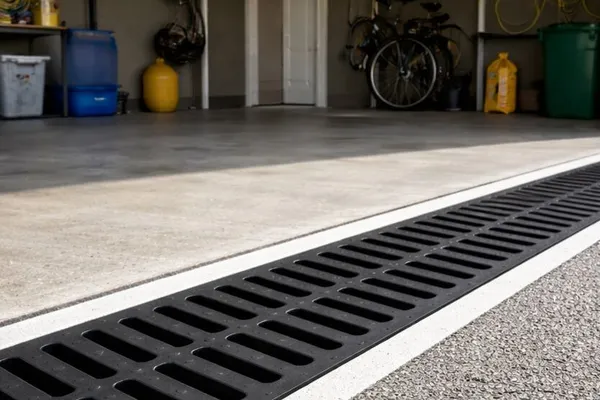
Trench drains installed at garage entrances capture runoff before it reaches the door.
View details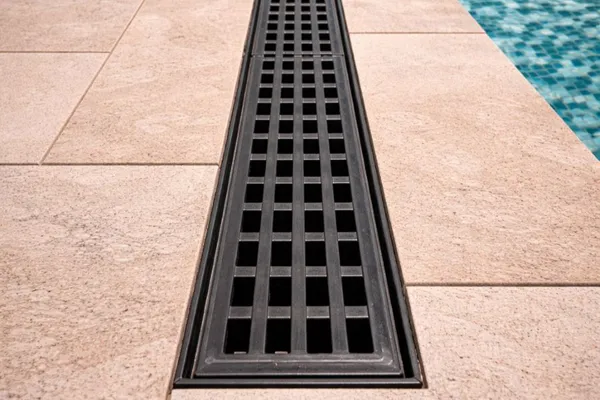
Low-profile drainage designed to manage splash water and seasonal moisture without disrupting recreation spaces.
View detailsFree site visit across the GTA. We'll tell you what you actually need — no upsell.