
Private property drainage
Most pool deck trench drains tie into private drainage on the property, which keeps the permit side simple as long as the outlet route is already legal and viable.
Pool deck trench drains move splash water and rain runoff off the walking surface before it turns into algae, ice, or a slip hazard. We keep the profile low, the grate foot-friendly, and the discharge route sorted out before we cut.
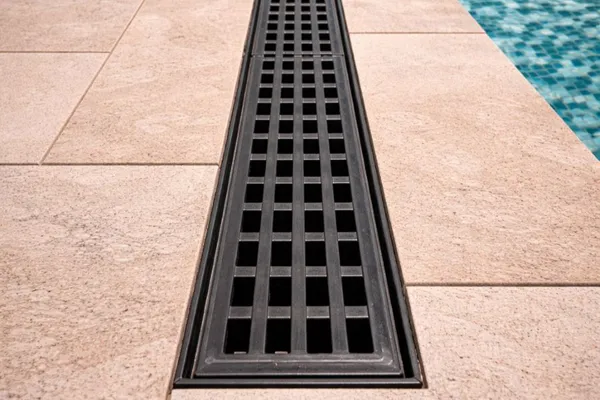
Pool water does not behave like driveway runoff. It is constant, it spreads fast, and it keeps surfaces wet for long stretches. Without a drain at the right edge, the deck never really dries out.
Splash-out, rain, and hose water collect in the same shallow spots and leave the walking surface wet long after the pool is closed up for the day.
If the deck has nowhere to send surface water, it runs across the path of least resistance - usually toward a door, a garden edge, or low turf that turns muddy.
Repeated wetting at the same line breaks down joint material, coping support, and bedding layers around stone, pavers, and decorative concrete.
Wet deck areas stay slick. Around pools, change areas, and recreation pads, that is not just annoying - it is a real safety problem.
Pool-side drains need to be discreet, corrosion-resistant, and safe under bare feet. Material choice matters more here than on a standard driveway install.
Salt systems, chlorinated water, and repeated wet-dry cycles are hard on cheap hardware. Around pools, we lean toward better grate finishes and corrosion-resistant fasteners.
The drain usually sits at the edge where water leaves the deck, not in the middle of the space where it fights the layout.
On pool decks, we usually place the drain at the perimeter where splash water and rainfall naturally leave the hard surface. That could be along the outside edge of the deck, between the deck and the house, or in front of a threshold that needs to stay dry.
We also pay attention to barefoot traffic, furniture movement, and cleaning. A good pool-side drain is one that collects water without creating a toe-catcher or an ugly line through the middle of the deck.
Most pool deck drains are a one-day install if we are working in an existing accessible edge. Decorative surfaces, tight access, or more delicate resets can turn it into a longer finish day, but the core install still moves fast.
We identify where splash water and rain are actually leaving the deck, not just where the drain would be easiest to hide.
Stone, pavers, or decorative concrete are cut or lifted in a controlled strip so the repair stays clean.
The channel is installed flush and straight so it handles water without catching bare feet, chair wheels, or pool equipment.
We connect the drain to the right discharge path and make sure the outlet can actually keep up with the water volume.
The crew resets or patches the surrounding deck so the drain looks deliberate and the walking surface stays safe.
Pool deck drains are mostly about surface water management, but they still have to discharge properly and work with the surrounding hardscape and grade.
Most pool deck trench drains tie into private drainage on the property, which keeps the permit side simple as long as the outlet route is already legal and viable.
Around pools, the drain has to work with the deck pitch and the way people move barefoot through the space. Placement and grate choice both matter here.
If the outlet just sends pool-side runoff into a low flower bed, beside the foundation, or onto another part of the deck, the job is not finished. The water needs a real path out.
Pool deck pricing depends on the deck finish, the available edge for installation, and where the runoff can legally discharge.
Get a fixed-price quote after a free site visit — not a range.
Usually not. Most decks only need a drain at the edge where water naturally leaves the surface or where runoff needs to be intercepted before it reaches a door, lawn, or low corner.
Yes, when they are specified properly. We use low-profile, foot-friendly grate options and install them flush so they do not create a trip point.
Cheap hardware can suffer in that environment. That is why we pay attention to grate finish, fasteners, and exposure level instead of treating a pool deck like a regular patio.
Yes. Most of this work is retrofit work. We open a controlled strip, install the channel, tie it into drainage, and blend the finish back around it.
Not as a casual surface-water tie-in. We confirm the discharge path based on the existing site drainage, the deck layout, and what the property can legally handle.
Putting the drain where it looks centered instead of where the deck actually sheds water. The best layout follows the surface, not the symmetry.
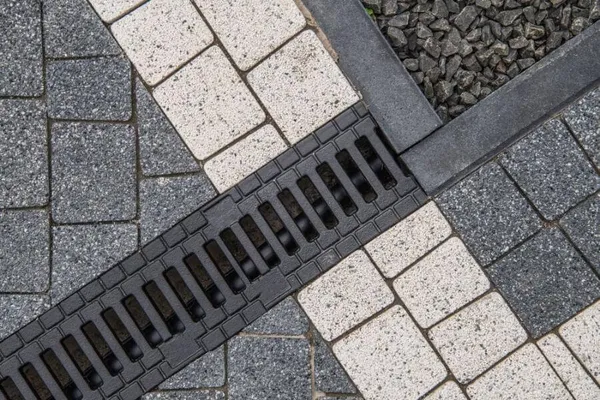
Linear surface drainage designed for long runoff paths, sloped driveways, and vehicle traffic.
View details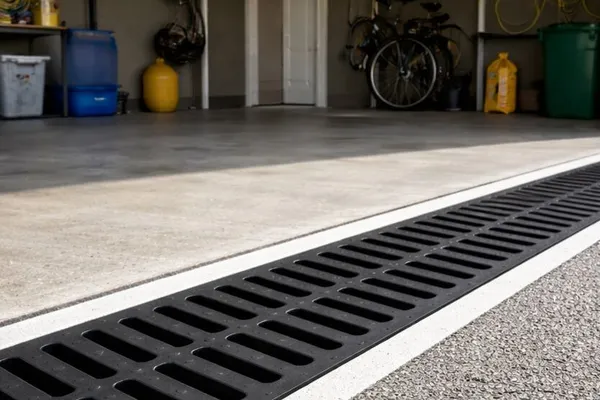
Trench drains installed at garage entrances capture runoff before it reaches the door.
View details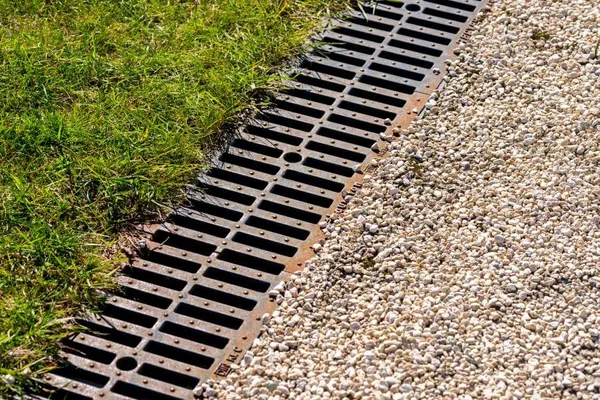
Low-profile surface drainage designed to protect finished outdoor spaces without altering elevations.
View detailsFree site visit across the GTA. We'll tell you what you actually need — no upsell.