
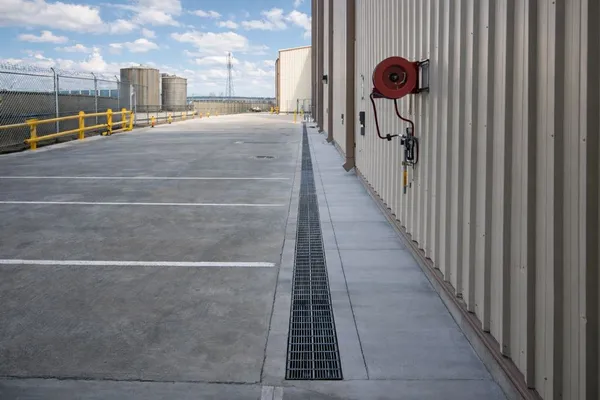
Exterior drains tied to private drainage
If we are tying into your existing private storm line, sump pump discharge, or dry well, no separate City of Toronto permit is normally required for the trench drain itself.
Local installers handling driveways, garages, patios, and commercial drainage across every Toronto neighbourhood. Toronto Water permits and Basement Flooding Protection Subsidy paperwork are managed end-to-end so you do not deal with the city.
We handle the full range of residential, commercial, and industrial trench drainage. Tap any service for a full breakdown.
Six on-site steps from the first cut to a flush, water-tight finish. Same sequence on every job — what changes is length, materials, and crew size.
They walked us through the Toronto Water permit options before we agreed on anything, then handled the paperwork. The drain went in clean in a day and after two winters it still moves water exactly the way they said it would.
Three things shape almost every Toronto trench drain job: which sewer system the property is on, whether the work touches city infrastructure, and whether the project qualifies for the Basement Flooding Protection Subsidy Program.
If we are tying into your existing private storm line, sump pump discharge, or dry well, no separate City of Toronto permit is normally required for the trench drain itself.
If the only viable outlet is a fresh connection to the city storm sewer, that connection requires a Toronto Water permit. We handle the application and inspection coordination.
Eligible Toronto properties can receive up to $3,400 toward backwater valves, sump pumps, and downspout disconnection work tied to flood prevention. Trench drainage that supports an eligible scope can sometimes qualify as part of a wider claim.
Surface water cannot be discharged into the sanitary sewer in Toronto. Any contractor proposing it is either confused about the property's sewer layout or willing to expose you to a flood-back risk. We do not do that work.
We are a Richmond Hill-based crew with a full-time Toronto rotation. Most central Toronto sites are within a 30 to 45 minute drive of our shop, depending on the time of day. Site visits are scheduled in fixed windows, not four-hour gaps, and the same crew that quotes the job is the crew that installs it.
Emergency callouts for active basement flooding or commercial dock-line failures are usually possible same-day or next-morning across the GTA.
Usually not, if we are tying into existing private drainage on your property. A permit is required when the work involves a new connection to the municipal storm sewer or any tie-in that affects the city boulevard. We confirm permit scope on the site visit before quoting.
On its own, no. The subsidy covers backwater valves, sump pumps, and downspout disconnection. When trench drainage is part of a wider flood-prevention scope that also includes those eligible items, the project as a whole can sometimes qualify. We will tell you up front whether your project applies.
They limit your outlet options. Older Toronto neighbourhoods — the Beaches, Riverdale, the Annex, Cabbagetown, Roncesvalles — still run combined storm-and-sanitary lines under significant stretches of road. Properties on those lines cannot legally discharge surface water to the public side without specific Toronto Water approval, so we route to a private storm line, sump discharge, or a yard outlet instead. The discharge route is decided before we cut any concrete.
Toronto Water requires roof runoff to be disconnected from the sanitary sewer across most of the city. Any trench drain we install follows the same logic — surface and roof water go to storm or approved exterior discharge, never sanitary. If your property is still connected, we flag it during the site visit because it can affect how we route the new drain.
Yes, when it's installed properly. Lake-effect snow, road salt, and clay soils that swell wet and shrink dry put more stress on surface drainage here than in most Ontario cities. We spec the right load class, bed the channel on a stable compacted base, and use corrosion-resistant hardware in salt-exposed areas. A drain installed without that prep will not survive five winters; one installed correctly will outlast the surrounding pavement.
Most residential driveway and garage door-line jobs are one day on site. Patio and pool deck retrofits in finished hardscape can take two days to keep the surface reset clean. Concrete or asphalt patches need 24 to 48 hours to cure before vehicle traffic returns.
Yes. A large share of our central Toronto work is retrofitting drains into older slabs, narrow laneways, and detached garages where the original drainage was either undersized or never designed for the runoff the property now produces.
From our Richmond Hill base, most central Toronto sites are 30 to 45 minutes away. Quote site visits run in fixed windows. For active flooding or commercial drainage failures, we typically respond same-day or next-morning.
Free site visit across the GTA. We'll tell you what you actually need — no upsell.